Nobody plans to stop paying a credit card. It usually happens because money runs short, and the bills pile up. What happens next isn’t a single event. It’s a sequence, and at each stage you have more or fewer options.
This article walks through that sequence, from the first missed payment to a possible lawsuit, with what you can do at each step. It isn’t a recommendation to stop paying. If you’re already struggling, go straight to the section on what you can do at each stage.
Disclaimer: This article is for general information only. It isn’t legal, financial or tax advice, and we aren’t attorneys, tax professionals or financial advisors. Credit card terms, debt collection laws and court procedures differ by issuer and by state, and they change.
Timelines below are typical, not guaranteed. If you’ve been sued, or you’re thinking about stopping payments, talk to a licensed attorney, a legal aid office or a nonprofit credit counselor about your own situation. We don’t recommend or endorse any specific company.
The short version
- Missing a due date brings a late fee and more interest. Interest keeps adding to the balance while you don’t pay.
- A late payment is usually reported to the credit bureaus once it’s 30 days past due, and it can lower a score a lot.
- After 60 days late, the card company can raise your interest rate.
- Around 180 days late, the issuer typically charges off the account. You still owe the money, and the debt can be sold or handed to a collector.
- A creditor or collector has to sue and win a court order before it can take money from your paycheck or bank account.
- Calling the issuer before you miss a payment gives you the most options.
The timeline
These stages are typical. Your issuer’s exact practices may differ.
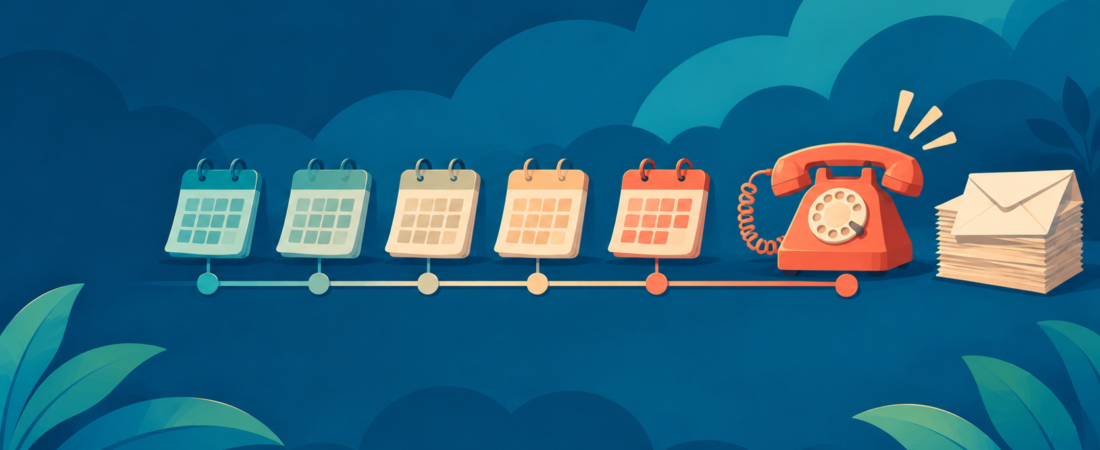
| When | What typically happens |
|---|---|
| Day 1 to 29 | A late fee can apply, interest keeps accruing, and you may be unable to use the card for new purchases. A payment this late usually isn’t reported to the credit bureaus yet |
| About 30 days late | The payment is reported to the credit bureaus as late. A score can drop sharply |
| More than 60 days late | The card company can raise your interest rate on all balances |
| 90 to 150 days late | More late reports, more calls and letters, and often a frozen or closed account |
| About 180 days late | The issuer typically charges off the account. You still owe the debt |
| After the charge-off | The debt may be sold or handed to a collection agency, and collection calls and letters continue |
| Possibly later | A lawsuit, then a court judgment, then garnishment if the creditor wins |
| Years later | The negative item can stay on your credit report for up to seven years, and a time limit on suing applies |
Stage 1: The first missed payment
A late fee can apply right away, and interest keeps adding to the balance. Capital One’s guidance says that late payments typically don’t hurt a credit score unless they’re more than 30 days late. Late fees vary by issuer.
If a payment was just late, the CFPB says you can contact the card company and ask whether it would consider waiving the late fee. Payments also have to be received by the due date, not just sent, so schedule them a few days early. The CFPB explains that card companies generally can’t treat a payment as late if it’s received by 5 p.m. on the due date.
Stage 2: 30 days late
This is when the damage to your credit usually begins. The payment is typically reported as late.
How much a score drops depends on the score you start with. In an older illustration from FICO, reported by Fox Business, a 30-day late payment could lower a 780 score by about 90 to 110 points and a 680 score by about 60 to 80 points. It’s a theoretical example, and your result depends on your whole credit report. But it shows why the first late payment matters most.
Stage 3: 60 days late
The CFPB says that if you’re more than 60 days late, the card company can raise your interest rate on all balances. The Federal Reserve’s overview of the CARD Act rules adds that when an issuer raises the rate because of a payment more than 60 days late, it must restore the earlier rate on previous transactions after you make six consecutive on-time minimum payments.
Stage 4: 90 to 150 days late
Late payments are reported in 30-day steps, and each step looks worse. You’ll likely get more calls, emails and letters from the issuer. The account may be frozen or closed. If you haven’t talked to the issuer yet, this is still worth doing. See credit card hardship programs.
Stage 5: The charge-off, around 180 days
Card issuers typically charge off a credit card account about 180 days after the last payment, which is six months, according to Capital One’s explanation of charge-offs, which matches common banking practice. A charge-off is an accounting step. It doesn’t cancel the debt.
The FTC says that if your creditor charges off the debt as a loss, you still owe it, and the creditor could sell it to a collector. The charge-off can stay on your credit report for up to seven years, even if you later pay.
Stage 6: Collections
After a charge-off, the debt may be sold or handed to a collection agency. Collectors have to follow the law. According to the FTC:
If the calls are about a relative’s debt after their death, see what happens to credit card debt when you die.
- They have to give you information about the debt, and you can dispute it in writing within 30 days of getting it.
- They can’t call more than seven times within seven days.
- They can’t call before 8 a.m. or after 9 p.m.
- They can’t lie about the amount you owe, or tell you you’ll be arrested or sued when that isn’t true.
You can also ask a collector in writing to stop contacting you, though the debt doesn’t go away. See our overview of credit card debt laws and your rights.
Stage 7: A lawsuit
A creditor or collector can sue you, as long as the debt is within the statute of limitations. If you’re served, respond by the deadline in the court papers. If you don’t, you may lose by default, and the court can enter a judgment against you without hearing your side.
The statute of limitations differs by state, and in some states a payment can restart the clock. It’s against the law for a debt collector to sue you for a time-barred debt, according to the FTC. See our guides to the statute of limitations by state and in Florida.
Stage 8: Judgment and garnishment
A collector who wants to take money from your paycheck or bank account must first sue and get a court order, according to the FTC. Many federal benefits, such as Social Security, are generally exempt from garnishment for consumer debts, with exceptions, and states have their own rules.
For ordinary consumer debts, the federal limit on wage garnishment is set by the Consumer Credit Protection Act. The Department of Labor says the weekly amount can’t exceed the lesser of two figures: 25% of your disposable earnings, or the amount by which your weekly disposable earnings exceed 30 times the federal minimum wage, which is currently $7.25 an hour. Some states set lower limits.
Here’s what that means for different weekly disposable earnings (our own calculation, using the federal rule):
| Weekly disposable earnings | Most that can be garnished |
|---|---|
| $217.50 or less | $0 |
| $260 | $42.50 |
| $400 | $100 |
| $800 | $200 |
| $1,200 | $300 |
“Disposable earnings” means your pay after deductions required by law, such as taxes.
What not paying costs, in dollars
Here’s a hypothetical, calculated by us. Say you owe $6,000 at 22.15%, the Federal Reserve’s average rate on card accounts charged interest in the second quarter of 2026, and you stop paying. We count only interest, with no late fees, and assume the issuer keeps adding interest.
| Time without paying | Balance from interest alone | Added to what you owe |
|---|---|---|
| 1 month | About $6,111 | About $111 |
| 3 months | About $6,338 | About $338 |
| 6 months | About $6,696 | About $696 |
| 12 months | About $7,473 | About $1,473 |
Late fees and any higher penalty rate would add to this. Some issuers stop adding interest after a charge-off, but practices vary, so ask. The balance can also grow through court costs if you’re sued and lose.
What you can do at each stage
| Stage | What to do |
|---|---|
| Before you miss a payment | Call the issuer and ask about a hardship program. The FTC advises contacting creditors early, before a collector is involved |
| Under 60 days late | Catch up if you can, and ask about waiving the late fee |
| 60 to 180 days late | Ask about a payment plan or hardship option, and talk to a nonprofit credit counselor about a debt management plan |
| A collector contacts you | Ask for validation in writing, check whether the debt is time-barred, and keep every letter |
| You’re sued | Respond by the deadline and get legal help. See debt relief options and settling it yourself |
| The debt is too big to repay | Talk to a licensed attorney about whether bankruptcy makes sense |
Common myths
- “A charge-off means the debt is gone.” It isn’t. You still owe it, and it can be sold.
- “They can take my paycheck right away.” Not without suing and getting a court order first.
- “Collectors can say anything.” They can’t lie, harass or threaten arrest.
- “If I wait long enough, it disappears.” A time limit on suing applies, but the debt doesn’t vanish, and a payment can restart the clock in some states.
- “A government program will erase it.” We found none. See what’s real and what isn’t.
If you have to choose
If you can’t pay everything, most nonprofit credit counselors suggest protecting housing, utilities and food first, then paying at least the minimum on cards when you can. It isn’t a legal rule. See where to start paying off credit card debt. For all your options, see how to get rid of credit card debt.
Frequently asked questions
What happens if I stop paying my credit card?
You’ll face late fees, interest, a lower credit score, possibly a higher rate, a charge-off at about 180 days, collections and, in some cases, a lawsuit.
How long before a credit card company sues you?
There’s no fixed date. It depends on the creditor and on the statute of limitations in your state. A charge-off typically comes first, at about 180 days.
Can they take my wages?
Only after suing you and getting a court order. The federal limit for ordinary consumer debt is the lesser of 25% of disposable earnings or the amount over 30 times the federal minimum wage.
Will the debt go away after seven years?
The negative item can drop off your credit report after about seven years, but the debt itself doesn’t disappear. A time limit on suing applies, and it varies by state.
Can I go to jail for not paying a credit card?
A collector can’t threaten you with arrest when that isn’t true, according to the FTC. Ignoring a lawsuit can lead to a court judgment, though, so always respond.
What should I do if I can’t pay?
Call your issuer before you miss a payment, ask about hardship options and talk to a nonprofit credit counselor. Our complete guide to credit card debt covers the options. If medical bills are behind the missed payments, see credit card debt after a medical emergency.
Conclusion
Missing payments has consequences that grow over time: fees, more interest, a damaged credit score, a possible charge-off and collections. You still owe the money, and the debt can be sold or handed to a collector. If you’re falling behind, act early and talk to your issuer or a nonprofit credit counselor.
For your protections, see credit card debt laws and your rights.
Sources
Information was checked in October 2026. Laws, practices and rates change, so confirm the details for your situation.
- How To Get Out of Debt, Federal Trade Commission, Consumer Advice
- Debt Collection FAQs, Federal Trade Commission
- Fact Sheet #30: Wage Garnishment Protections of the Consumer Credit Protection Act, U.S. Department of Labor
- Credit cards key terms, Consumer Financial Protection Bureau
- When is my credit card payment considered late?, Consumer Financial Protection Bureau
- An Overview of the Regulation Z Rules Implementing the CARD Act, Consumer Compliance Outlook, Federal Reserve System
- What you should know about late credit card payments, Capital One
- What Is a Charge-Off on a Credit Card?, Capital One
- How Late Credit Card Payments Hurt Your Credit Score, Fox Business (FICO illustration)
- Consumer Credit – G.19, July 2026 release, Board of Governors of the Federal Reserve System
The dollar examples are hypothetical and calculated by us. They assume a fixed rate, interest added monthly and no fees, and they show how the math works, not what any issuer will charge.