A personal loan is one of the most common ways people try to get out from under credit card debt. You borrow a fixed amount, use it to pay off your cards, and repay the loan in equal payments over a set term. If the loan’s rate is lower than your cards’, you can save money, and you get a clear end date.
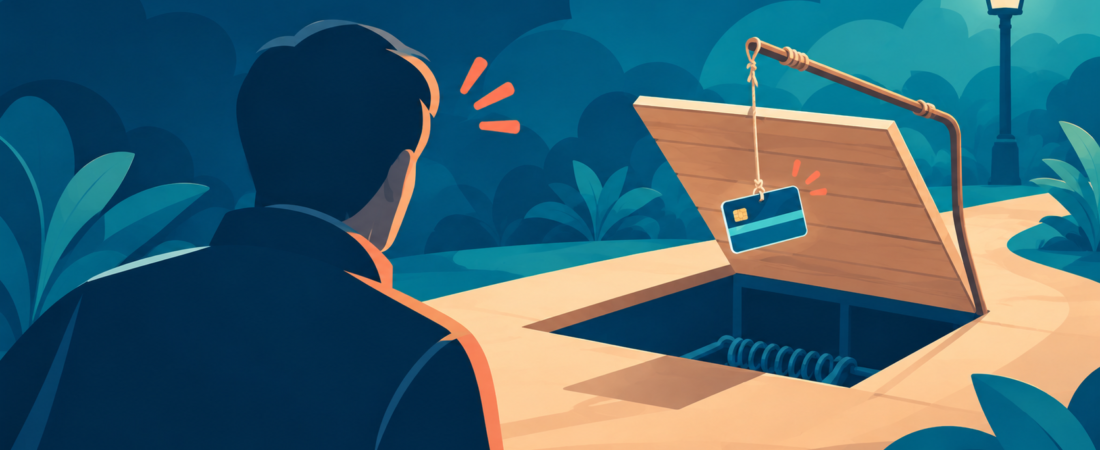
But a personal loan doesn’t fix the habits or the budget that created the balances. This article looks at what actually happens to people after they take one out, based on credit bureau data, and how to avoid the pattern that sends many of them back into debt.
For the application steps, see our guide on how to consolidate credit card debt. For the types of loans, see loans to pay off credit card debt, and for comparing offers, see the best consolidation loan options.
Disclaimer: This article is for general information only. It isn’t financial, legal or tax advice, and we aren’t financial advisors, attorneys or tax professionals. Loan terms, rates and eligibility differ by lender and borrower, and they change. Check the details with the lender, and consider talking to a nonprofit credit counselor about your own situation. We don’t recommend any specific lender or product.
The short version
- A personal loan can cut your interest cost and give you a fixed payoff date, if its APR is clearly below your cards’.
- Credit bureau data shows that people who consolidate usually see their card balances drop sharply and their credit scores rise at first.
- The same data shows that, for many, card balances climb back toward their old levels within about 18 months.
- The loan only helps if you stop adding to the cards.
- Compare the full cost, including fees, not just the monthly payment.
How a personal loan for card debt works
You apply to a lender, which looks at your credit, income and existing debts. If you’re approved, you get a lump sum, either sent to you or paid directly to your card companies. You repay it in fixed monthly payments over a set term. The loan has an APR and may have an origination fee that’s deducted from what you receive.
For context, the Federal Reserve’s G.19 report put the average rate on 24-month personal loans at commercial banks at 11.86% in the second quarter of 2026, compared with 22.15% on card accounts charged interest. Those are averages, not offers, and what you’d get depends on your credit.
What happens after people consolidate: the TransUnion data
In 2023, TransUnion published a study called “Debt Consolidation in a Rising Economy,” which looked at people who took unsecured personal loans to consolidate credit card debt. Here’s what it found:
- Card balances fell sharply. Credit card debt consolidators saw their card balances drop by 57% on average after consolidating.
- Credit scores rose. On average, scores went up by 18 points.
- But for many, the relief didn’t last. Balances returned close to their previous levels 18 months later for many consolidators.
The study tracked median credit card utilization, which is the share of your credit limits you’re using:
| Group | Before the loan | Right after | 18 months after |
|---|---|---|---|
| Credit card debt consolidators | 59% | 14% | 42% |
| People who refinanced an existing personal loan | 57% | 55% | 64% |
| People who didn’t consolidate | 48% | 48% | 50% |
Source: TransUnion, study covering April 2021 to September 2022.
An earlier TransUnion study from 2019 found that consumers who took a debt consolidation loan paid down just over 58% of their card debt with it, bringing average card balances from $14,015 to $5,855, and that most saw a credit score boost.
So the loan usually works in the short run, and the habits are what decide the long run. TransUnion’s own education lead said that consolidating can be a good option, but it’s important to pair it with changes in spending habits so the card debt doesn’t return.
A CNBC report from March 2026 adds two things. TransUnion forecast that unsecured personal loans would be the main driver of new borrowing in 2026. And, according to TransUnion data given to CNBC, historically 14% to 17% of new personal loans have been used to refinance earlier personal loans, which suggests some borrowers end up in a cycle.
The math of the bounce
Here’s a hypothetical, calculated by us. Say you owe $12,000 on cards at 22.15%, and you take a 36-month personal loan at 11.86% with no fee to pay them off. The payment is about $398 a month, and the total interest over three years would be about $2,320.
Now compare two paths 18 months in:
| Path A: cards stay at zero | Path B: cards climb back to $12,000 | |
|---|---|---|
| Loan balance left | About $6,530 | About $6,530 |
| Card balances | $0 | $12,000 |
| Total debt | About $6,530 | About $18,530 |
| Compared with the original $12,000 | About 46% less | About 54% more |
| Monthly cost | About $398 | About $398 for the loan, plus about $221 in interest alone on the cards |
On Path B, you’d be paying roughly $619 a month just to cover the loan payment and the cards’ interest, with the card balance not going down. That’s the trap: you end up with the loan and the card debt.
Pros and cons
| Pros | Cons |
|---|---|
| A fixed payment and a set end date | Fees can eat into the savings |
| A rate that may be well below your cards’ | The rate you’re offered may not beat your cards |
| One payment instead of several | A hard credit inquiry and a new account |
| Lower credit utilization, which often helps scores | Easy to run the cards up again |
| Often no collateral required | A longer term means more total interest |
Who tends to benefit, and who should think twice
A loan tends to work best if:
- You can qualify for an APR that’s clearly below your blended card rate, including fees.
- You can stop adding to the cards.
- You have steady income to cover the payment.
Think twice if:
- Your credit is weak. CNBC reported that, although personal loans are often touted for credit card consolidation, subprime borrowers are not eligible for significantly better rates.
- The rate is close to your cards’. The savings may disappear after fees.
- You might keep charging. The data above shows how common that is.
- You’d need to put your home up as collateral. The FTC notes some consolidation loans do, and that you could lose your home if you can’t pay.
How to avoid the bounce
The loan frees up room on your cards. The goal is to leave it empty.
- Make a plan before the loan funds. Know how you’ll pay your monthly bills without the cards.
- Take cards out of easy reach. Remove saved card numbers from your phone, browser and shopping apps, and use debit or cash for everyday spending.
- Decide what to do with the cards. Closing them lowers your available credit, which can raise your utilization and affect your scores, so many people keep them open but unused. Choose what you can stick with.
- Build a small cushion. The Federal Reserve’s household survey found that 63% of adults would cover a $400 emergency using cash or its equivalent, so 37% would not. A cushion keeps a surprise bill off the cards.
- Automate the loan payment so you’re never late.
- Check your card balances once a month. If they start to rise, adjust early.
- Pay extra on the loan when you can, if there’s no prepayment penalty.
For more on staying on track, see our guide on how to get out of credit card debt.
Before you borrow
- Work out your blended card rate, and make sure the loan’s APR is clearly lower. See how to calculate credit card debt and interest.
- Compare total cost, not the payment. A lower payment can mean a much higher total.
- Prequalify with several lenders, using soft credit checks.
- Watch for scams. The FTC says any up-front fee a lender wants before granting the loan is a cue to walk away.
- Compare other options: a balance transfer, a hardship program, a nonprofit debt management plan, or your own payoff plan. Our best-way guide compares them.
Frequently asked questions
Is a personal loan a good way to pay off credit card debt?
It can be, if its APR is clearly below your cards’ rates and you stop adding to the cards. TransUnion data shows many people’s card balances climb back, so the habits matter as much as the loan.
Will a personal loan hurt my credit score?
Applying usually involves a hard inquiry, and the loan is a new account. But TransUnion found that people who consolidated card debt with a personal loan saw an average 18-point increase in their scores, mostly because their card utilization fell.
How much can I save with a personal loan?
It depends on your balance, the rates and fees. The Fed’s averages in Q2 2026 were 22.15% on card accounts charged interest and 11.86% on 24-month personal loans, but your offer may differ. Use our payoff calculator.
Should I close my credit cards after paying them off with a loan?
Closing them lowers your available credit, which can raise your utilization. Many people keep them open and stop using them. Pick the approach you can stick with.
What if I can’t qualify for a lower rate?
Then a loan may not save money. Consider a hardship program, a balance transfer, a nonprofit debt management plan or your own payoff plan. Our complete guide to credit card debt covers them.
Can I use a personal loan if I have bad credit?
You may find offers, but they usually cost more, and some cost as much as the cards. Compare the APR and fees carefully, and consider talking to a nonprofit credit counselor.
Conclusion
A personal loan can cut your interest and give you a fixed payoff date, but only if its APR is clearly below your cards’ rates and you stop adding to the cards. Credit bureau data shows that, for many people, card balances climb back within about 18 months.
For habits that help, see how to pay off credit card debt.
Sources
Information was checked in October 2026. Rates, fees and offers change, so use current offers when you compare.
- Following Rapid Rise in Credit Card Use, More Consumers Now Using Unsecured Personal Loans to Consolidate Debt, TransUnion, August 17, 2023
- Debt Consolidation Often Results in Higher Credit Scores and Better Credit Performance, TransUnion, October 30, 2019
- Personal loan use grows as consumers tackle high-rate credit card debt, CNBC, March 11, 2026
- Subprime borrowers fuel surge in personal loans, TransUnion finds, CNBC, February 20, 2026
- Consumer Credit – G.19, July 2026 release, Board of Governors of the Federal Reserve System
- Report on the Economic Well-Being of U.S. Households in 2025: Savings and Investments, Federal Reserve Board, May 2026
- How To Get Out of Debt, Federal Trade Commission, Consumer Advice
- What To Know About Advance-Fee Loans, Federal Trade Commission
The example is hypothetical and calculated by us. It assumes a fixed rate, equal payments and no fees, and it shows how the math works, not what you’ll be offered. The TransUnion findings describe averages and medians for a group of borrowers, not what will happen to any one person.